
Sparrow Mahjong
AAKATTUGAMESCasual
4.460.00 Reviews
- Version
- 1.0.0
- Installs
- 10.00K
- Age Rating
- Everyone
Screenshots


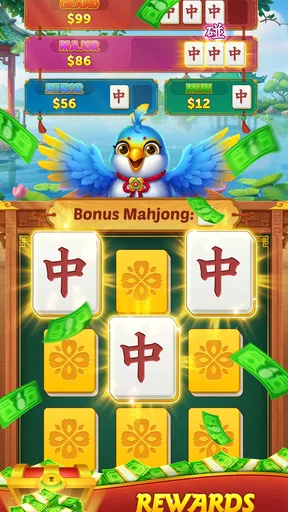
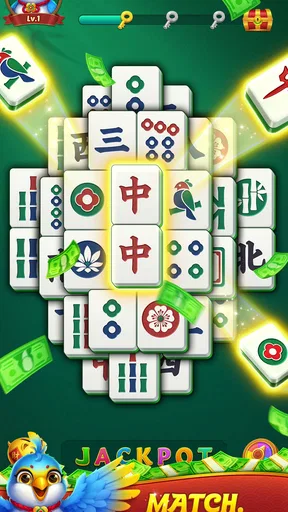
Our Review of Sparrow Mahjong
 Analysis by Appyee
I spent time with Sparrow Mahjong as a light casual game, and my first impression is that it understands the appeal of Mahjong better than many overloaded mobile releases do: it gives you a simple reason to open it, settle into a board, and focus on matching tiles. The store summary promises relaxation and mastery, while the short description identifies it as Sparrow Mahjong. In practice, that positioning makes sense for players who want a quiet puzzle rather than a competitive multiplayer experience or a large collection of side systems.
It is developed by AAKATTUGAMES and is available free of charge. That matters when judging its value: you can try the game without paying an entry fee, so the decision is mainly about whether its particular style of Mahjong earns a place in your routine. I would not approach it expecting a premium board-game adaptation with a long campaign or a deep social layer. I would approach it as an accessible, low-pressure way to play a familiar tile-matching format on a phone.
How the game feels in everyday use
The best way to understand this release is to imagine a short break in the day. I can see myself opening it while waiting for an appointment, taking a few minutes after lunch, or winding down before bed. Mahjong works well in those moments because the core activity is easy to recognize, but the board still asks me to look carefully and plan ahead. That combination gives the game more staying power than a completely automatic time-filler.
The casual classification is a good fit. This is not the sort of game I would choose when I want a dramatic story, fast reactions, or constant rewards. Its appeal comes from observation and decision-making. I scan the available tiles, consider which pair is safest to remove, and try not to leave the board in an awkward state. Even a familiar layout can become interesting when an apparently obvious match blocks more useful choices later.
That makes the game suitable for players who enjoy puzzles but do not want a demanding learning curve. Mahjong rules can look intimidating when presented as a traditional tabletop game, yet a tile-matching mobile format is much easier to approach. I can begin by identifying identical, available tiles and gradually become more deliberate about preserving options. The game therefore works for a newcomer who wants a gentle introduction as well as for someone who already knows the rhythm of this kind of puzzle.
One useful habit is to pause before taking the first easy match. The most visible pair is not always the best opening move. I found that it is more helpful to inspect the upper layers and the edges first, then choose a match that exposes several future possibilities. This is a small change in play, but it turns each board from a sequence of obvious taps into a compact planning exercise.
Another practical approach is to treat the board as a set of bottlenecks. If a tile is covering two important choices, removing it may be more valuable than taking a pair that is already easy to reach. I would especially use this approach when playing without a time goal, because it encourages thoughtful progress instead of rushed matching. It is the kind of strategy that gives a casual game a little more depth without making it feel stressful.
What free access means for the decision
The confirmed price is free, so there is no purchase threshold to justify before trying it. That is a genuine advantage over paid puzzle games: I can install it, play a few sessions, and decide based on the actual feel of the boards rather than on screenshots or a description. For a casual title, this low-commitment entry point is important because the right question is not whether it replaces a full Mahjong collection, but whether it provides enough pleasant play for the moments when I need it.
Free access does not automatically make every limitation irrelevant. A game can cost nothing and still be poor value if it becomes repetitive quickly or makes ordinary play uncomfortable. I therefore judge Sparrow Mahjong by how well it supports short, repeatable sessions. Its strongest value is convenience: it offers a focused puzzle activity without asking me to learn a complicated system before I can enjoy it.
I would also separate free availability from assumptions about optional purchases. I would not describe the game as a paid product, and I would not attach a monetary value to features that are not established here. For someone deciding whether to try it, the reliable conclusion is simple: the initial download and access are free, which makes experimentation easy. If your decision depends on a specific premium feature or a particular purchase model, you should inspect the current app page before committing to a longer-term routine.
The release is listed as version 1.0.0, so I see it as an early, straightforward entry rather than a mature platform with years of accumulated systems. That is not necessarily a weakness. A clean first version can be appealing when I want a game that does not bury the main puzzle under menus, events, or unrelated distractions. At the same time, players who expect a large amount of content immediately should keep their expectations measured.
Small decisions that improve each session
My first recommendation is to play in deliberate passes. Instead of tapping the first pair I recognize, I look for tiles that are limiting access to the rest of the structure. This helps prevent a common Mahjong mistake: clearing easy matches while leaving the difficult center or upper layer untouched. It also makes losses more informative, because I can identify where my earlier choices reduced the available routes.
My second recommendation is to use the game as a concentration break rather than as background entertainment. Mahjong loses much of its appeal if I am constantly switching between it and other tasks. A short, attentive session is more satisfying than a longer distracted one. This is especially useful for people who want a calm activity after work but do not want to commit to a novel, a full strategy game, or a competitive match.
A third insight is that replay value depends on how much variety the board presentation offers in actual use. The core matching idea is naturally repeatable, but players who need constant novelty may find the format narrower than a broad casual-game collection. I would alternate it with another type of puzzle if I noticed myself solving boards mechanically. Sparrow Mahjong is at its best as a dependable small activity, not necessarily as the only game on my phone.
There is also a useful distinction between relaxation and effortless play. The game can feel calming because it slows me down, but it still asks for attention. Someone looking for a completely passive experience may prefer a simple idle title or a visual toy. Someone who wants a quiet task for the mind will probably get more from this format, especially when the goal is to finish a board with fewer careless choices rather than to chase constant stimulation.
Where it fits among other casual Mahjong choices
Compared with a traditional Mahjong game, this release is easier to pick up for a quick session. Traditional versions can involve rules, scoring, and several players, while a tile-matching format focuses on visual recognition and board management. That makes Sparrow Mahjong a better match for solo relaxation than for someone specifically seeking the full competitive or cultural ruleset of classic Mahjong.
Compared with broad casual-game collections, it offers a more focused experience. A collection may provide greater variety, but it can also create more friction through extra menus and unrelated mechanics. I prefer Sparrow Mahjong when I already know I want a Mahjong puzzle and do not want to browse through several mini-games first. The trade-off is obvious: specialization brings clarity, while a larger collection may keep a restless player interested for longer.
Compared with premium puzzle releases, the free price makes Sparrow Mahjong easier to test, but a paid alternative may feel more substantial if it offers a carefully structured campaign or a polished set of modes. I would choose the paid option only when those specific qualities matter to me. For a quick, no-cost trial of a casual Mahjong experience, Sparrow Mahjong has the more convenient starting point.
Who is likely to get the most from it
I would recommend it to people who enjoy matching puzzles, want a calm solo game, and prefer short sessions that can begin without preparation. It is also a sensible option for a player who is curious about Mahjong-style tile layouts but does not want to start with a complicated rulebook. The Everyone content rating makes it broadly approachable for general audiences, including households looking for a simple puzzle rather than an intense action game.
It may be particularly useful for someone building a small collection of low-pressure games. I could keep it available for travel, waiting rooms, or those evenings when I want something interactive but not emotionally demanding. Because the game’s value comes from repeatable board-solving rather than a story that must be followed in order, it can fit around an unpredictable schedule.
I would skip it if my priority is multiplayer competition, narrative progression, rapid reflex challenges, or a large variety of game modes. I would also hesitate if I need a Mahjong app that reproduces the full traditional rules and scoring system. This is a casual tile-matching experience, and expecting it to serve as a complete substitute for every other form of Mahjong would lead to disappointment.
Players who dislike repetition should make use of the free access as a test rather than assuming they will play it for months. Try several sessions at different times of day and notice whether the board-solving itself remains satisfying. If the pleasure comes from careful matching, the game can become a reliable habit. If the appeal depends mainly on unlocking new systems, a broader casual title may be a better fit.
What the current reception suggests
The game holds a 4.4 average from around three hundred ratings, with roughly sixty written reviews. Those figures suggest that the early audience has generally responded positively, while still leaving room for individual experience to differ. I treat that reception as encouragement to try the game, not as proof that every player will find the same level of variety or comfort.
Its reach is also still modest, with over ten thousand installs. I read that as a sign of an early-stage casual release rather than a universally established mobile staple. That can be appealing if I like discovering smaller games, but it also means I would not compare its visibility or ecosystem with the biggest Mahjong brands. The sensible evaluation is personal: does the focused format work for my own breaks and puzzle preferences?
The minimum operating-system requirement is Android 7.0, which keeps the technical entry point relatively broad for Android users with older compatible devices. I would still check the app’s current compatibility on my particular phone before installing, especially if the device is unusually old or has limited storage. The key benefit is that the listed requirement does not push the game toward only recent hardware.
My verdict on value and whether to try it
Sparrow Mahjong delivers its clearest value through free, focused access to a familiar casual puzzle. I like that the concept can fit into a few quiet minutes, yet rewards more care than random tapping. The best sessions are the ones where I scan the board, protect future choices, and treat each match as part of a larger clearing plan. That gives the game enough mental texture to feel worthwhile without turning relaxation into work.
The trade-off is scope. I would not choose it as my main game if I wanted a broad progression system, social competition, or a long list of distinct activities. Its appeal is narrower and more practical: open it, settle into the tile layout, and solve what is in front of you. For some players that focus will feel refreshing; for others it may become repetitive sooner than a larger alternative.
My recommendation is to try it if you want a free casual Mahjong puzzle for solo breaks and you are comfortable judging value by the quality of the core activity rather than by a large feature list. Start with a patient scanning habit, give the board your full attention, and see whether the matching decisions stay enjoyable across several sessions. If you want traditional Mahjong rules or competitive play, choose a more specialized alternative instead.
For my own use, I would keep Sparrow Mahjong as a compact relaxation game rather than an all-purpose mobile pastime. It is approachable, easy to test, and supported by a positive early reception. Most importantly, it knows what kind of experience it is trying to provide. My buy-or-skip verdict is an easy try for puzzle fans, a cautious skip for players seeking depth beyond tile matching, and a worthwhile free download when a calm, focused break is exactly what you want.
Verdict
Strengths of Sparrow Mahjong
- Relaxing tile-matching gameplay suitable for short sessions.
- Clear visuals make tile patterns easy to recognize.
- Progressive puzzles provide a gentle increase in challenge.
- Offline play is convenient when you have no internet connection.
- Simple controls are accessible for casual and new Mahjong players.
Limitations of Sparrow Mahjong
- Some levels may feel repetitive after extended play.
- Limited variety can reduce long-term replay value.
- Hints or extra moves may be restricted in difficult stages.
- Small tiles can be harder to distinguish on compact screens.
- Ads may interrupt gameplay, depending on the version installed.
Similar Picks in This Category
View All
My Talking Angela
Outfit7 Limited4.2

My Talking Tom
Outfit7 Limited4.3

Pou
Zakeh4.2

My Talking Tom 2: Pet Game
Outfit7 Limited4.3

Candy Crush Saga
King4.6

Bridge Race
Supersonic Studios LTD4.1
Frequently Asked Questions
What is Sparrow Mahjong, and how is the game played?
Sparrow Mahjong is a digital mahjong game centered on matching identical tiles and clearing the board. It is generally easy to understand for beginners, while later layouts can require more planning and careful tile selection. Before downloading, players should know that the experience is designed primarily for casual, puzzle-focused play rather than a full traditional mahjong simulation with complex scoring, betting, or multiplayer tables.
Is Sparrow Mahjong suitable for beginners?
Yes, Sparrow Mahjong is suitable for beginners because its core gameplay is straightforward: identify matching, available tiles and remove them from the layout. New players can usually learn the basic rules after only a few rounds. However, some boards may become more challenging as the game progresses, so patience and forward planning are important. It is also a relaxing choice for players who enjoy short puzzle sessions.
Can Sparrow Mahjong be played offline?
Sparrow Mahjong may be convenient for quick entertainment, but offline availability can depend on the version installed and the features being used. Basic puzzle gameplay may work without a constant connection, while advertisements, updates, analytics, or optional online services could require internet access. It is best to check the app-store description and test the game in airplane mode before relying on it during travel.
Does Sparrow Mahjong contain advertisements or in-app purchases?
Players should check the current Google Play or App Store listing because monetization can vary between releases, regions, and operating systems. Many free casual puzzle games include advertisements, optional purchases, or both. Ads may appear between rounds or when requesting extra help, while purchases can sometimes remove advertising or provide bonuses. Review the payment details and parental controls before allowing children to play.
What permissions and devices are required to install Sparrow Mahjong?
Sparrow Mahjong should be downloaded only from the official Google Play Store or Apple App Store, where the required operating-system version, file size, and permissions are displayed. Casual games normally need relatively modest hardware, but compatibility can differ on older phones and tablets. Before installing, confirm that your device has enough storage, supports the listed system version, and that the requested permissions seem appropriate for a puzzle game.
Play our best games!


